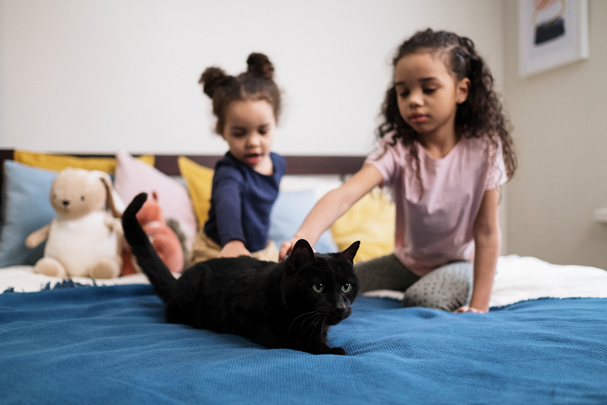
Pets and Loneliness: How Our Animals Help Us Connect
Loneliness is one of the most pressing health challenges of our time. But for millions of people across Europe, a wagging tail, a gentle purr, or even a curious hamster can make all the difference.
Feeling lonely or socially isolated is something most of us experience at some point in our lives. Whether it’s a big life change, getting older, or simply the pace of modern life pulling us apart from others, loneliness can take a real toll on our wellbeing. What many people don’t realise, however, is that our pets may be one of the most powerful antidotes — not just because they keep us company at home, but because they actively help us connect with the world around us.
The science behind this is compelling. Here’s what the research tells us.
Pets as Social “Icebreakers”
If you’ve ever taken a dog for a walk and ended up chatting with a stranger for twenty minutes, you’ll already know this instinctively. Pets have an extraordinary ability to bring people together. An Austrian study described dogs as excellent “social lubricants”, noting that they boost the self-esteem and agency of their human companions while naturally drawing people into conversation and connection.
That chance encounter at the park or on the street? Your pet made it happen. 🐕
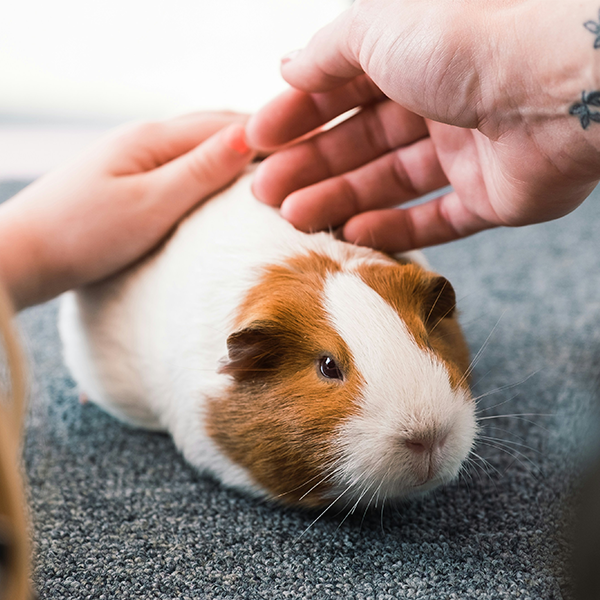
A large study of 2,600 pet owners across Australia and the United States reinforced this finding, confirming that pet owners were significantly more likely to get to know people in their neighbourhood than those without pets. Pets give us a reason to be out in the world — and a ready-made topic of conversation when we get there.
More Pets, Less Loneliness — Especially for Older Adults
The link between pet ownership and reduced loneliness is especially clear among older people. A 2020 German study of more than 1,000 people over 65 who were living without a partner found that female dog owners were less socially isolated and less lonely than women in the same situation who did not own pets. For people navigating the later stages of life — often without a partner, sometimes with less mobility — a pet can be a lifeline, not just emotionally but socially.
The routines that come with pet ownership, such as daily walks, trips to the vet and visits to the pet shop, create natural opportunities for social contact that might otherwise be missing.

A Global Pattern: Pets Reduce Isolation
This isn’t just a finding from one or two studies. A comprehensive review of international research spanning the US, Canada, Australia, the UK, Germany, Japan, the Netherlands, and Norway found a consistent link between pet ownership and reduced social isolation. Across vastly different cultures and contexts, the pattern holds: people with pets tend to feel less cut off from the world.
The review also noted that this benefit became even more pronounced during the COVID-19 pandemic. When human contact was restricted and loneliness surged across Europe and beyond, pet owners fared better. Their animals gave them structure, comfort, and continued connection through online communities and socially-distanced chats with fellow pet owners.
More Than Companionship
It’s easy to think of pets simply as companions at home, warm bodies to share the sofa with. And of course, that comfort matters enormously. But the research shows that pets do something more: they draw us outward. They give us reasons to leave the house, topics to talk about, and a shared identity with other pet owners that can spark real friendships.
Whether it’s a dog that turns a morning walk into a neighbourhood social event, or a cat whose antics become the subject of a conversation with a colleague, pets connect us — to our communities, to strangers, and to each other.
The Takeaway
Loneliness is complex, and pets are not a cure-all. But the evidence is clear that they play a meaningful role in helping people of all ages and in all circumstances feel less alone. If you or someone you know is struggling with isolation, the companionship of a pet might be a small but powerful step towards feeling more connected.
That’s the #PetPower — and science backs it up.

Sources:
- Kotrschal K, 2018, How Wolves turned into Dogs and How Dogs are valuable in meeting Human Social Needs, People and Animals: The International Journal of Research and Practice. https://docs.lib.purdue.edu/cgi/viewcontent.cgi?params=/context/paij/article/1015/&path_info=1015_Kotrschal.pdf
- Hajek A et al, 2019, How do cat owners, dog owners and individuals without pets differ in terms of psychosocial outcomes among individuals in old age without a partner? Aging and Mental Health. https://www.tandfonline.com/doi/full/10.1080/13607863.2019.1647137
- Kretzler B, Konig H et al, 2022, Pet Ownership, loneliness, and social isolation: a systematic review, Social Psychiatry and Psychiatric Epidemiology. https://www.ncbi.nlm.nih.gov/pmc/articles/PMC9272860/
- Wood L et al, 2017, Social capital and pet ownership – a tale of four cities, ScienceDirect. https://www.sciencedirect.com/science/article/pii/S2352827317300344